SEO – Research, Integrate, optimise.
An increasingly popular practice within the digital realm is the art of SEO. An online marketing channel that is growing in stature and importance, modern day online companies need to KNOW about SEO.
Let’s first define SEO, Search Engine Optimisation is the operation of increasing the quantity and quality of traffic to the digital platforms of a company’s website as inferred to by techopedia. Every business wants to know people are viewing their offerings and SEO helps attain that.
How does one increase the traffic to a website without paying a fortune for ads you may ask? Easy, let me introduce to you the magic of keyword research!
Keyword research is essentially the discovery of words/terms that generate high search volumes on a regular basis within the Google search engine depicted by moz.com. Exemplified by the image below on the Google AdWords tool “Nike Shoes” is a term searched for between 10,000 – 100,000 times per month!
Through Google crawling processes, the websites with copy that is most relevant to the targeted keyword will be the ones ranked in a higher position in the Google search results list, thus optimising the potential traffic to online business platforms. wordstream.com describes integrated keywords within website copy to be ‘speaking the language of your visitors/customers.
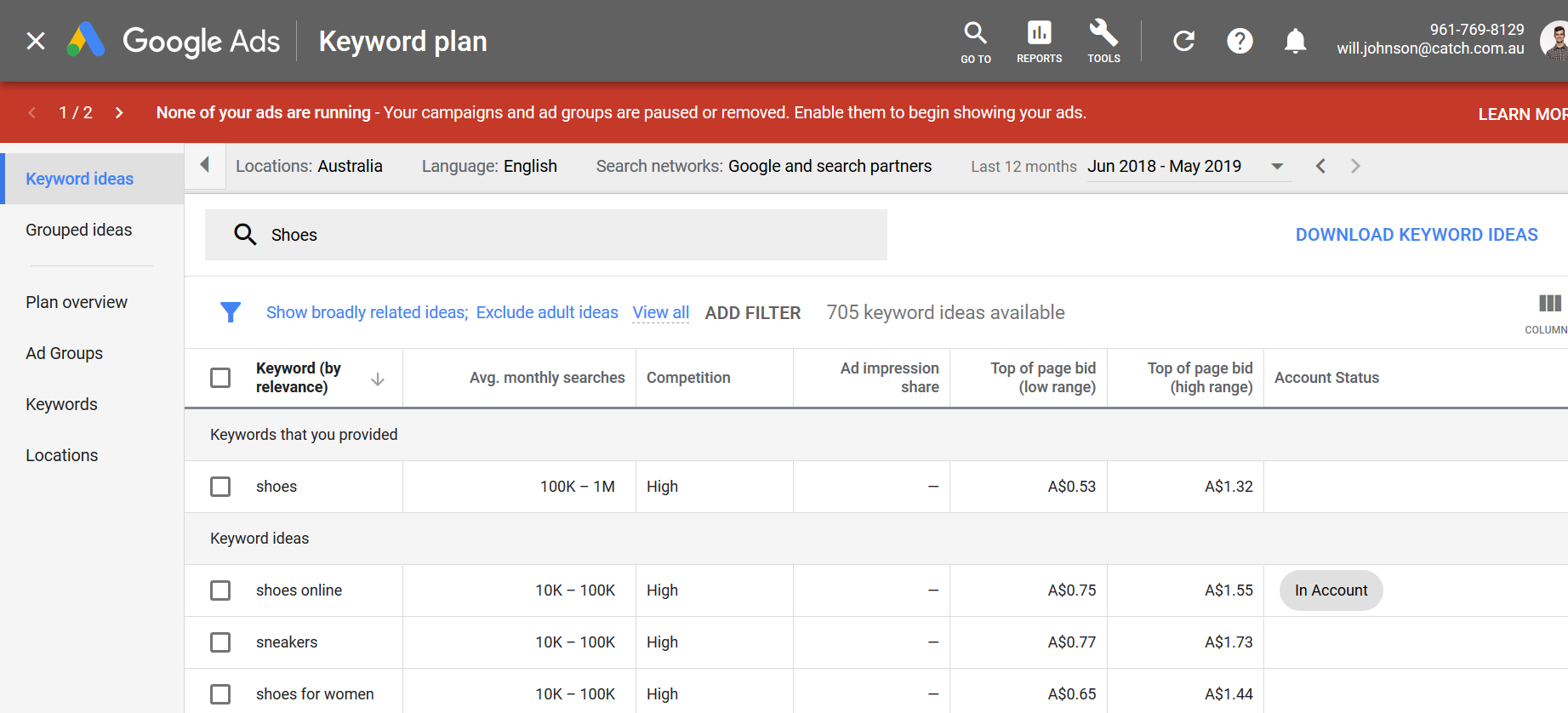
Keyword Planner function.
This has got me thinking, how much do companies focus on generating content with a keyword focus to capture their target audience? Perhaps an established online presence is first needed before attacking organic search. Let me know what you think!
The scoop: google ads
One of the most popular advertising tools for online companies to use, Google Ads helps optimise the amount of visitors to your website as explained by disruptiveadvertising . This blog will investigate the main features of Google Ads and how firms implement this system to increase overall revenue.
First up is the pay per click (PPC) bidding system. disruptiveadvertising depicts the the auction system that takes place where companies bid to have their advertisements displayed on Google search results pages. So, how does Google determine ranking order of ads on search result pages? In truth the ad’s of big companies such as Nike and Apple monopolize most top positions because they are capable of paying more. However, as neilpatel explains, Google determines ranking order based on factors including bidding amount for your ad and the quality/relevancy of your ad to the query. Therefore, solid bid + quality content of ad = better chance of a higher ranking! Source below: ads.google.com

Keyword Planner is one of, if not the main tool of Google Ads that every digital marketing strategist should understand. As wordstream depicts, keyword planner is used to search for a variety of keywords that firms look to focus their Google advertisements and website content around. For companies that are looking to enhance their long term marketing strategy by optimising the amount of organic search to their website, targeting unique keywords that have a high search volume will go a long way to improving overall rankings fromdreamstolifestyle
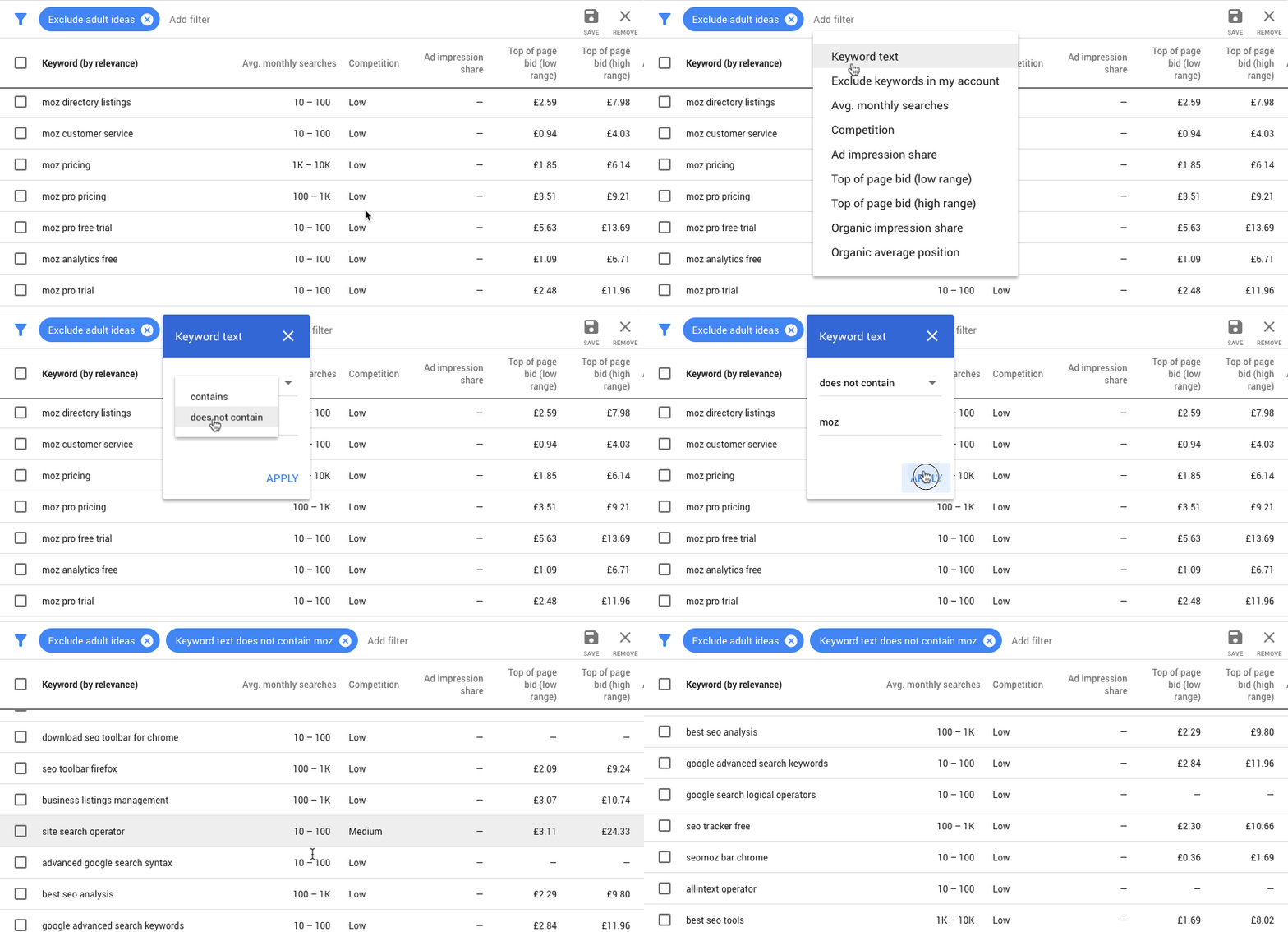
Google Ads is certainly a complex beast, knowing how to capitalize on the fundamentals goes a long way to improving website engagement.
google analytics – reducing the bounce.
It’s fair to say that the first time I jumped onto Google Analytics (GA), i was overwhelmed with a wave of confusion. No idea where to look, what to look at and what all the data meant, until I dug deeper and started researching GA a little more.
Firstly, lyfemarketing defines Google Analytics as a service for business owners to monitor the performance of their website through a myriad of different metrics. Understanding how well the website is performing in terms of traffic and purchases is a good indicator of successful website management right? The aim of this blog will be to point out one of the key metrics of GA and highlight its importance from a website development and marketing perspective. The feature i want to focus on is the landing pages tab under behaviour, as seen in the image below. Here, multiple different metrics are provided to paint a picture about landing page performance. The one specific metric i want to hone in on is bounce rate. According to abtasty bounce rate is when a user leaves a website before interacting with it and industry standards set a high bounce rate as anything over 50%. In the example of data below, landing page number 6 has a very high bounce rate of 70.84%. So, how do we minimise this number? Well, according to optimizesmart we can reduce bounce rate by predominately updating the landing page with rich, keyword focused content that is going to engage consumers more.
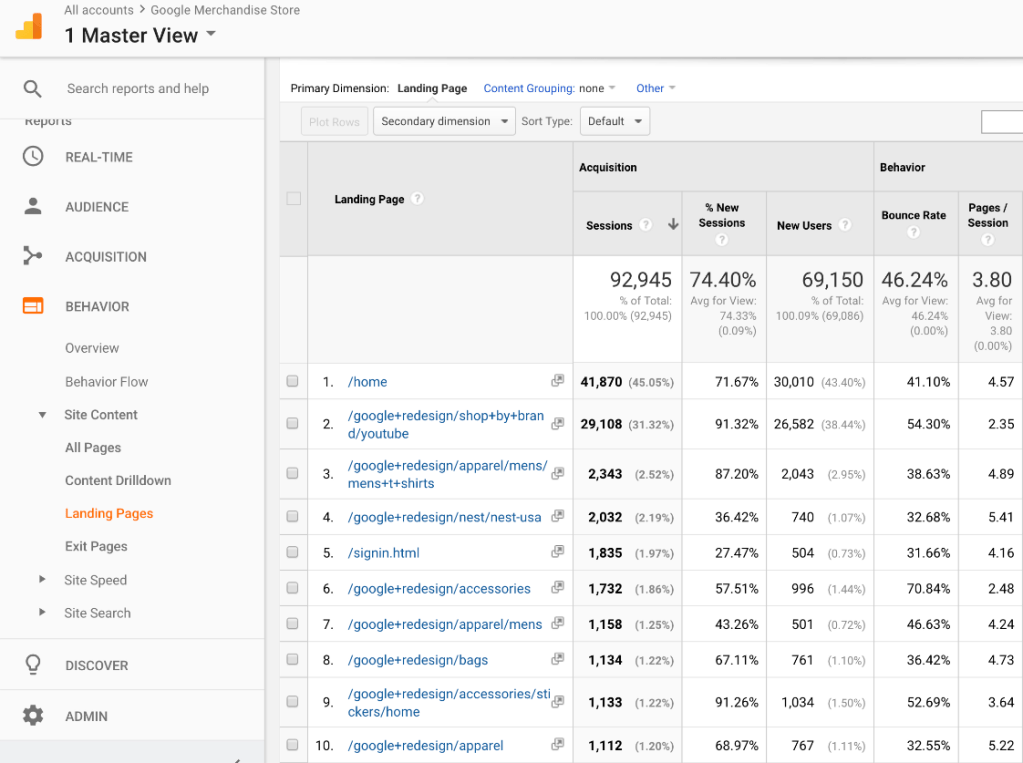
Source: jeffalytics
The bounce rate is a commonly referred to metric of GA and obviously reducing it and having users spend more time on your website is going to improve business outcomes. What other ways do you think businesses can reduce bounce rate and improve the overall attractiveness of their website and digital platforms?
SEO’S FAVOURITE BEVERAGE – LINK JUICE!
Previously in my blogs I’ve talked about the importance of integrating keywords into website copy to improve traffic. In this blog I want to investigate the concept of link juice in SEO and more specifically the strategies that can be implemented to enhance link juice for a company’s website.
So, what is link juice? Well, woorank defines link juice as the value of links passed from one website to another through the physical form of hyper links. Search engines such as Google then recognise these links as votes that other websites see your website as promotion worthy. wordstream goes onto explain the importance of link building in digital marketing because of how it helps search engines in their ranking system of your website. This then got me thinking, are back links from some websites more valuable than others in SEO?
Well, it turns some website back links are in fact more valuable for SEO than others. According to moz back links from highly trustworthy and authoritative websites hold the most link juice for other websites to gain. So, this got me thinking even deeper, what’s an example of a domain that search engines such as Google would recognise as most trustworthy and authoritative? The answer I came up with is school domains ending in .edu! I then started brainstorming ways in which websites such as e-commerce companies could attain back links from these school websites and integrate this tactic into their marketing strategy.
As crazyegg explains, the more link juice the better. A potential idea to attain a consistent regular flow of high quality link juice would be to develop a school sponsorship program whereby the company donates gift cards to the school for them to use in their annual raffles/competitions and in return they implement a back link on their school website (ending in .edu) promoting the main company. See the image below from riverviewss.eq.edu.au of Riverview State School’s online newsletter which displays the potential arena where a sponsoring company’s website link could be listed.
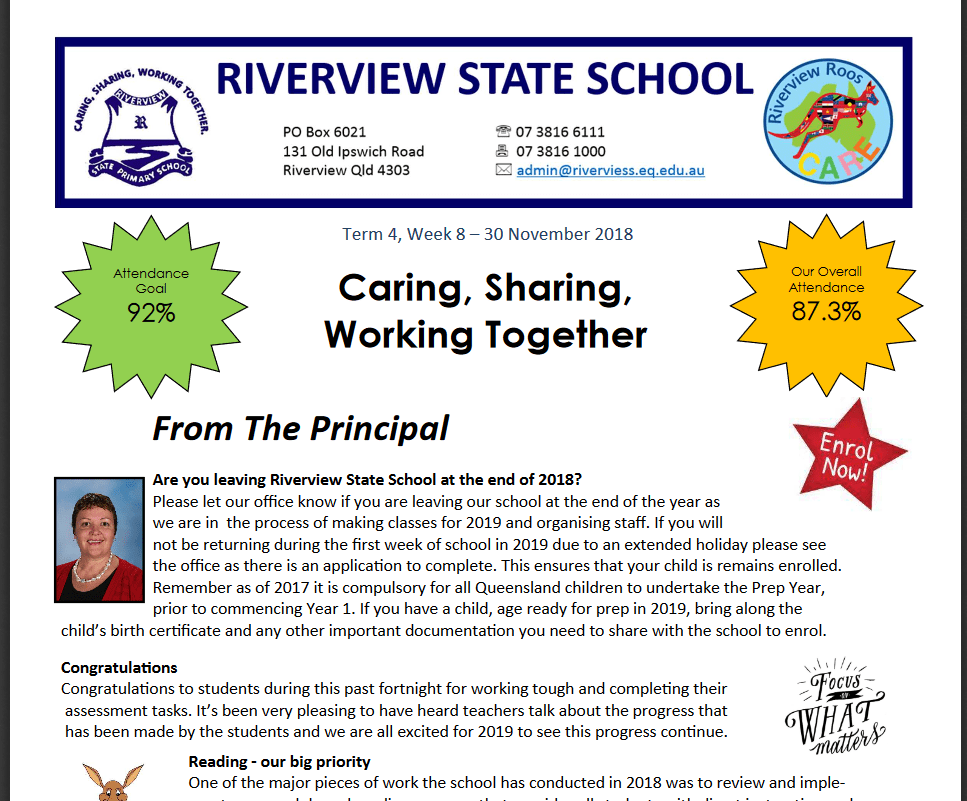
Link juice is evidently a vital concept for SEO specialists and marketers as a whole to understand. I wonder how many companies are using school sponsorship programs in their SEO strategy and exactly how much link juice do back links from school websites carry? Let me know if you can think of any other websites that would carry such valuable link juice!
RANK OR CLARITY?
I feel as though many of my SEO focused blogs have concentrated too much on this notion that traffic is boosted solely by rank on the search engine results pages. Don’t get me wrong, customising your website so that Google improves your landing page rankings is an effective strategy that shows proven results. However, neilpatel claims increasing traffic numbers can also be improved when considering how attractive your website links appear to the average user. In this blog I will be sparking a conversation about whether rank is the only priority in SEO, or if other strategic factors come into play when optimising website traffic.
With many online companies today focusing on integrating keywords in their online copy, do they lose sight on the visual appeal of their titles and meta descriptions in a desperate endeavour to improve ranking? Neil Patel references the concept of “Rich Snippets” in his blog which are defined as the section of text under the headline links of search engine results pages. The idea propelled by backlinko is to include ‘rich’ and concise content within these snippets to provide users with a clear grasp of the contents of that landing page. The image below from “LINK” demonstrates a good example of a rich snippet at work!
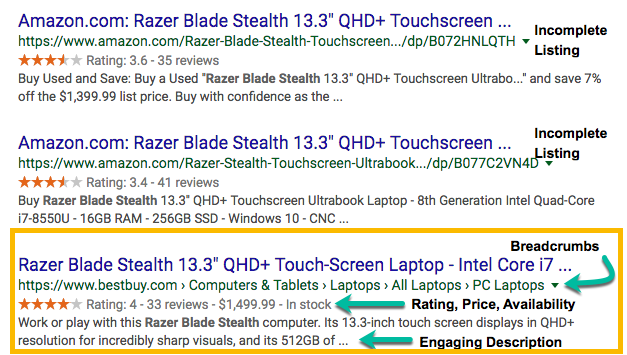
semrush
This led me to ask what is more worthwhile? To formulate landing page titles and meta descriptions with dedicated keyword focus? OR to develop rich snippets within meta descriptions? Ultimately, I believe it comes down to whether a company wants to improve ranking or click through rate. Think about it, obviously implementing highly searched for keywords is going to help ranking once Google crawls it. On the other hand, developing titles and meta descriptions that are more informative will be naturally better at motivating users to click through and visit the website (CTR). In my opinion online businesses should try and seamlessly implement a combination of both tactics to get the best out of both worlds.
An interesting quandary for SEO specialists and digital marketers to consider when developing their business strategies. Let me know what you think is a more worthwhile strategy, keyword focus or concise copy?
 Digi Blog